A stroke can happen suddenly, and recognizing its warning signs quickly can make an important difference. A stroke occurs when blood flow to part of the brain is interrupted, either because a blood vessel is blocked or because a blood vessel bleeds. The World Health Organization describes stroke as a medical emergency that requires immediate …

A stroke can happen suddenly, and recognizing its warning signs quickly can make an important difference.
A stroke occurs when blood flow to part of the brain is interrupted, either because a blood vessel is blocked or because a blood vessel bleeds. The World Health Organization describes stroke as a medical emergency that requires immediate treatment.
For travelers, residents, and families in Bali, knowing the basic warning signs can help someone respond quickly if a stroke is suspected.
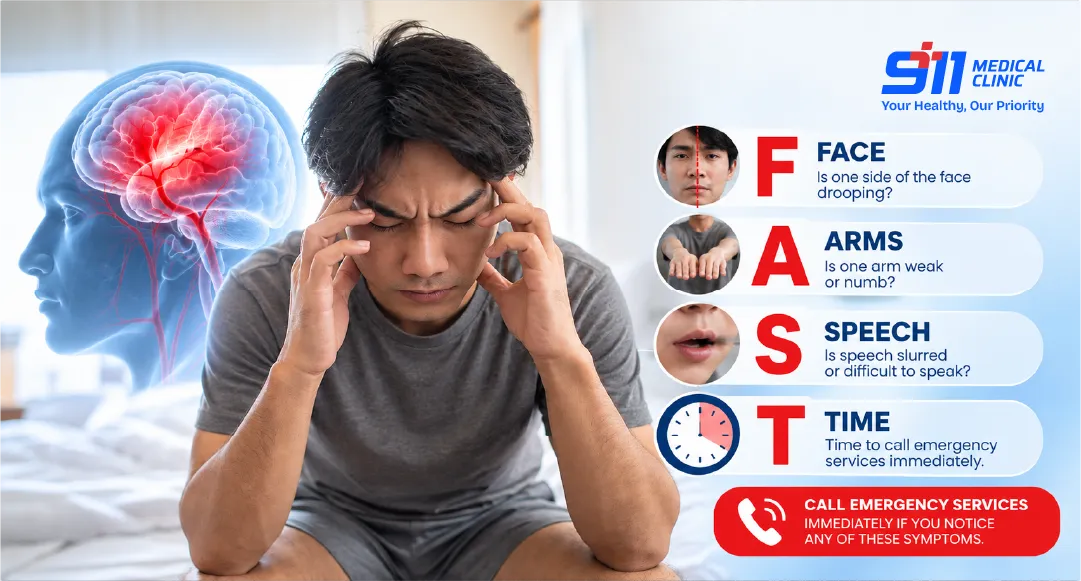
One commonly used way to recognize stroke symptoms is FAST. The CDC also uses the expanded B.E. F.A.S.T. approach, adding balance and eye symptoms to the traditional FAST signs.
What Does FAST Mean?
F — Face
Ask the person to smile. Does one side of the face droop or appear different? Sudden facial weakness can be a sign of stroke.
A — Arms
Ask the person to raise both arms. Does one arm become weak or drift downward? Sudden weakness or numbness, particularly on one side of the body, is a common stroke warning sign.
S — Speech
Ask the person to repeat a simple sentence. Is the speech slurred, strange, or difficult to understand? Sudden difficulty speaking or understanding speech can indicate a stroke.
T — Time
If any of these signs appear suddenly, time matters. Seek emergency medical care immediately and note when the symptoms first started. The CDC emphasizes that rapid treatment can reduce the brain damage caused by stroke.
What Other Stroke Symptoms Should You Know?
Stroke does not always present only with facial drooping, arm weakness, or speech difficulty.
Other possible symptoms include:
- Sudden loss of balance
- Sudden dizziness
- Sudden difficulty walking
- Sudden vision problems
- Sudden numbness or weakness
- Sudden confusion
- Sudden severe headache with no known cause
The WHO and CDC both identify sudden balance problems, vision changes, facial weakness, arm weakness, and speech difficulties among important stroke symptoms.
Why Is Time So Important?
The brain depends on a continuous supply of oxygen and nutrients through the bloodstream.
When blood flow is interrupted, brain tissue can become damaged.
The WHO states that stroke requires immediate treatment, while the CDC emphasizes that fast treatment can reduce the brain damage caused by stroke.
Some stroke treatments are time-sensitive, which is why recognizing symptoms and seeking emergency care quickly is important.
What Should You Do If You Suspect a Stroke?
If someone suddenly develops symptoms that may indicate a stroke:
- Treat the situation as an emergency.
- Note the time when symptoms first appeared or when the person was last known to be well.
- Seek emergency medical assistance immediately.
- Do not wait to see if symptoms disappear.
- Tell medical professionals what symptoms you observed and when they started.
The CDC specifically advises calling emergency medical services rather than driving the person yourself because medical personnel may be able to begin treatment during transport.
The appropriate emergency pathway will depend on your location and local emergency medical system.
What If the Symptoms Disappear?
Do not automatically assume that the danger has passed.
The CDC notes that temporary stroke-like symptoms can indicate a transient ischemic attack (TIA). Although symptoms may disappear, a TIA still requires medical attention because it can be a warning of a more serious stroke risk.
If someone experiences sudden neurological symptoms even if they improve medical assessment should not be delayed.
Who Is at Risk of Stroke?
Stroke can affect different age groups, although risk increases with certain medical and lifestyle factors.
The WHO identifies high blood pressure as a major contributor to stroke risk, along with factors including smoking, high cholesterol, diabetes, physical inactivity, unhealthy diet, harmful alcohol use, and other health conditions.
Managing these risk factors through appropriate medical care and healthy habits can form part of long-term stroke prevention.
Recognizing Stroke Can Save Valuable Time
You do not need to be a medical professional to recognize that something is wrong.
If someone suddenly develops facial weakness, arm weakness, speech difficulty, balance problems, or vision changes, think FAST or B.E. F.A.S.T. and seek emergency medical assistance immediately.
For people staying in Bali, knowing where to access emergency medical care before an emergency happens can also be part of being prepared.
911 Medical Clinic provides 24-hour emergency services in Pecatu, Bali.
If you suspect that someone is having a stroke, seek emergency medical assistance immediately. For medical emergencies in and around Pecatu, 911 Medical Clinic provides 24/7 emergency medical care.
References
Book a Consultation
It’s easy and free!

dr. Kevin Martin Nugroho
General practitioner who graduated as a medical doctor in 2019. He brings over three years of clinical experience, including nine months serving in a mining site and more than three years in hospital settings. Currently, dr. Kevin practices at 911 Medical Clinic, where he provides patient-centered care with a warm and educational approach. His commitment to clear communication and compassion makes him a trusted healthcare provider for patients of all backgrounds.